
I write an overview of the economy about once a month and for the longest time the entire thing could have been summed up in a single sentence: nothing has changed since the last time I wrote about the economy. Of course, over a month we shouldn’t expect much change but even over longer periods, the economy is remarkably consistent. That doesn’t mean we don’t see big changes in the economy because we do, but they happen a lot slower than we expect or remember. And sometimes, even big changes that seem like they are turning the world upside down, take a lot longer than we expect. I first encountered email in 1988 about the same time I first became aware of artificial intelligence (machine learning not LLMs). It took another decade before networking and the browser turned email into something economy-changing. IBM’s Deep Blue first beat Gary Kasparov at chess in 1996 and it has taken another 30 years for AI to become the next big thing.
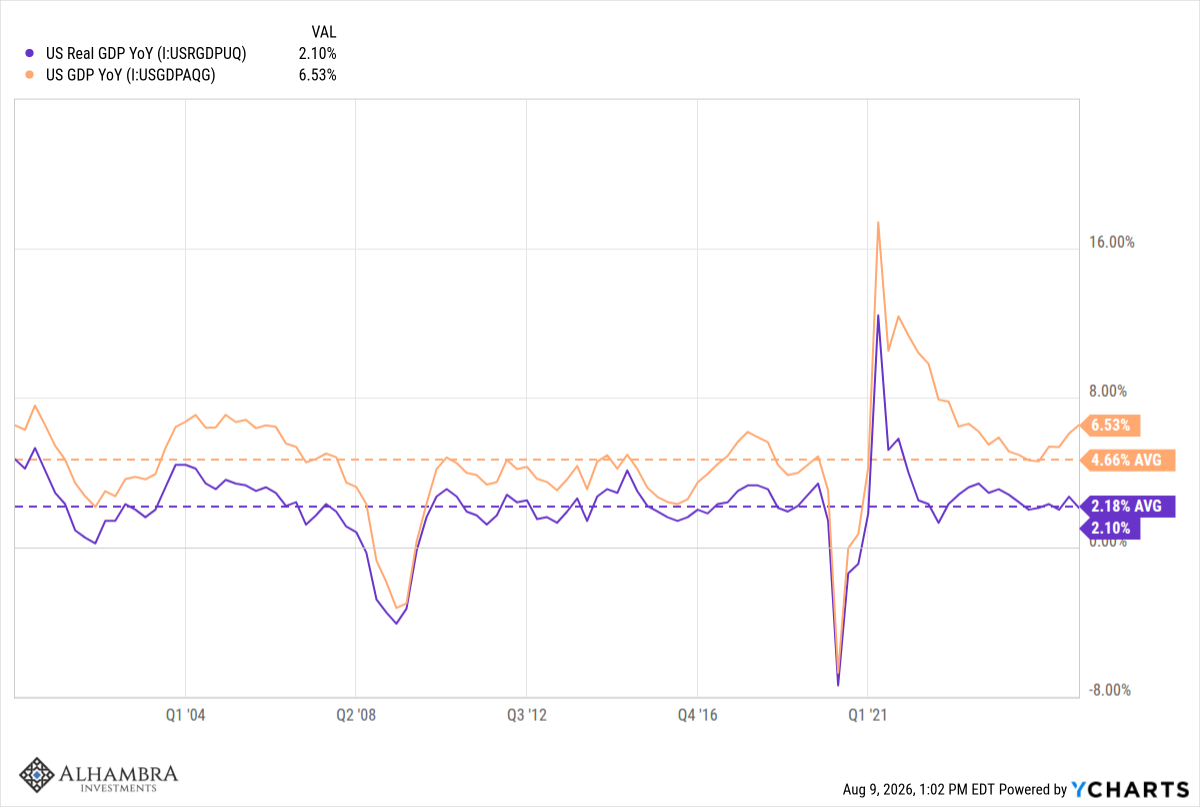
Monitoring the economy is something investors should do but they shouldn’t expect much change over the short term. Status quo ante is, well, status quo. If I look at the economy today, with no political blinders, it is remarkably unremarkable. We’ve had 3 Republican and 2 Democratic administrations this century. Congress has been controlled by both parties at times over the last quarter century. We’ve had multiple military conflicts, a financial crisis, and a global pandemic. Through it all, US Real GDP has grown at an average of 2.18%. The change over the last year? 2.1%.
Nominal GDP (Real GDP + Inflation) has also been pretty stable this century but the post-COVID years have produced a larger spread between nominal and real GDP. The difference is, of course, inflation, and as you can see the divergence has recently turned higher again. That is worrisome but as you’ll see below, expectations for the future have already moderated.
Was that a result of good economic policy? Bad economic policy? Good or bad monetary policy? Or is it just the functioning of a (mostly) free market economy overpowering the worst impulses of politicians, economists, central bankers, and Wall Street? Maybe you see things differently but from my viewpoint, it is pretty obvious that the economy has a (collective) mind of its own and knocking it off course, even with some pretty bad policy choices from both sides of the political aisle, is pretty darn hard.
So, again this month, my message has not changed and neither has the economy.
Market Indicators
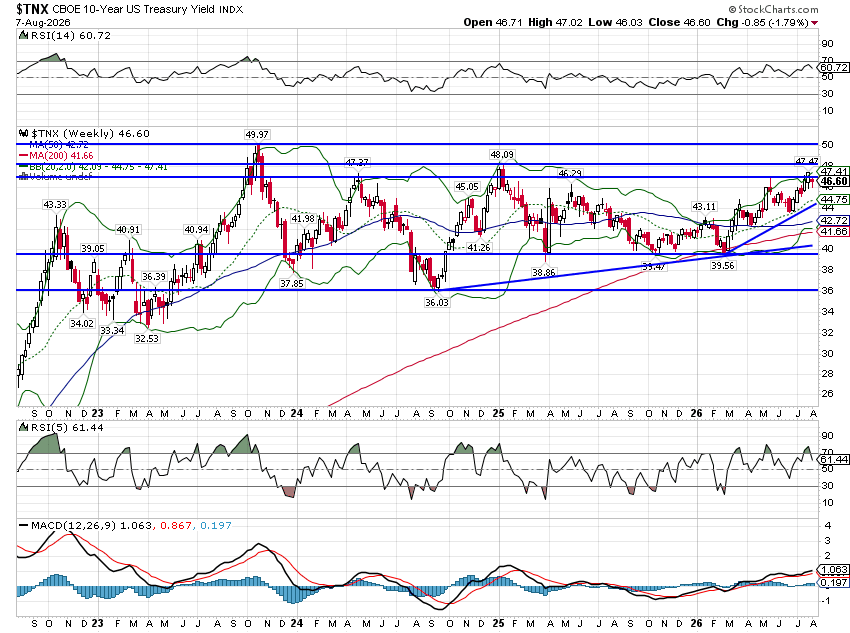
The 10-year Treasury yield is at the high end of the range it has been trading in for most of the last 4 years. Rates are in a short-term uptrend that started in March but until we break out of that range, one way or the other, there is only noise here, no signal.
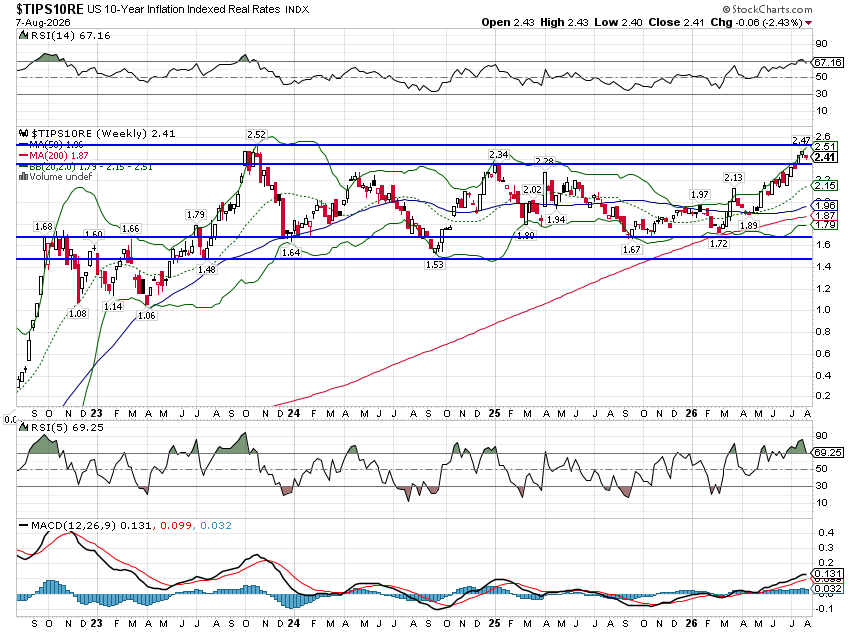
Real interest rates are in a similar pattern although the time frame is a little shorter, more like three years of range-bound trading.
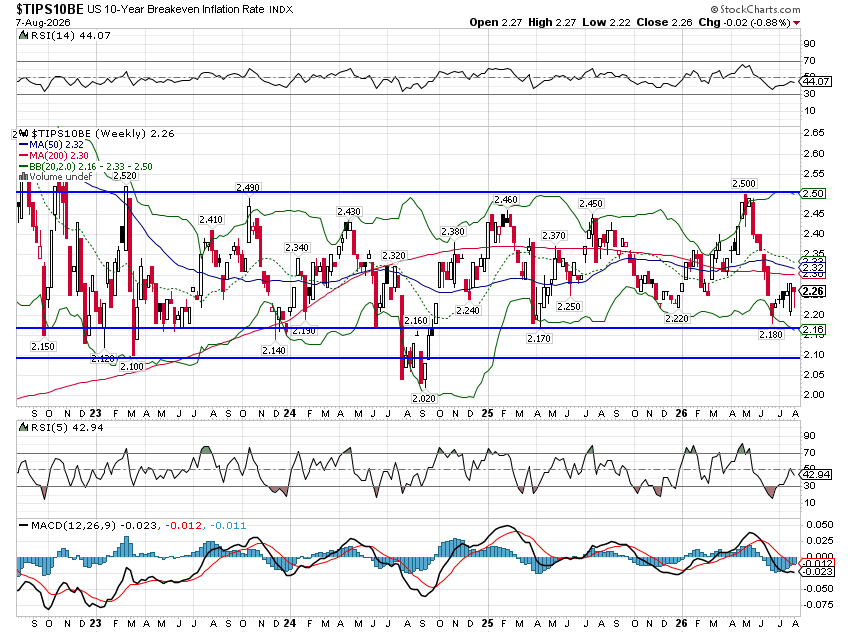
10-year breakeven inflation rates have also been stable, in a range for the last 4 years. More recently, as you can see, inflation expectations have fallen back to the low end of the range. That is a pretty significant drop in expectations of about 15%, from 2.6% to 2.2% even as actual inflation has been trending higher. Is the market wise? We’ll see.
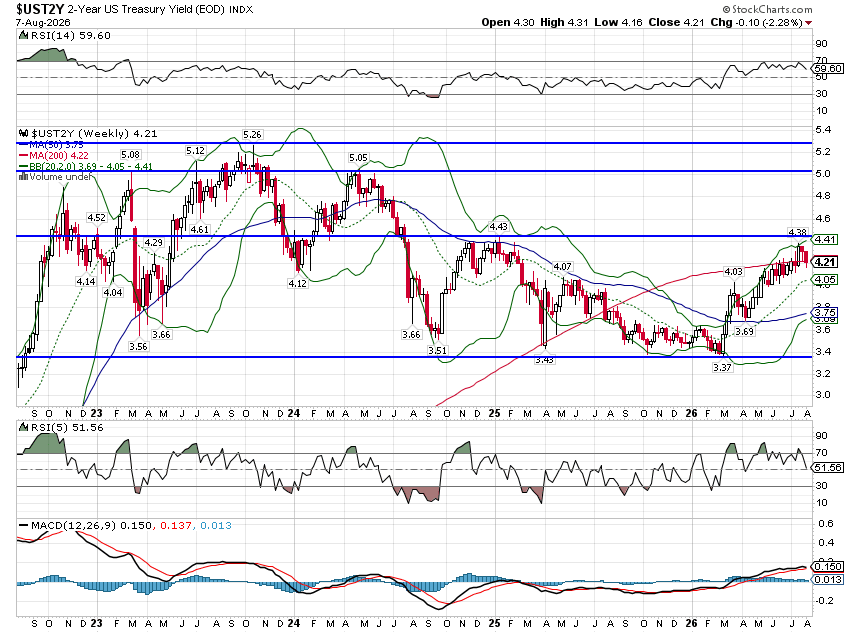
Shorter maturities have been more volatile, trading in a wider range, but are also still in the range they’ve been in for the last 4 years. The volatility in short rates is driven by expectations about monetary policy, which until recently was driven by the Fed’s forward guidance. It will be interesting to see if short rates become more or less volatile with Warsh’s change in communication policy. The consensus is that rates will be more volatile but I’m not so sure about that. Which is more likely to change? The Fed’s opinion about the economy or the economy?
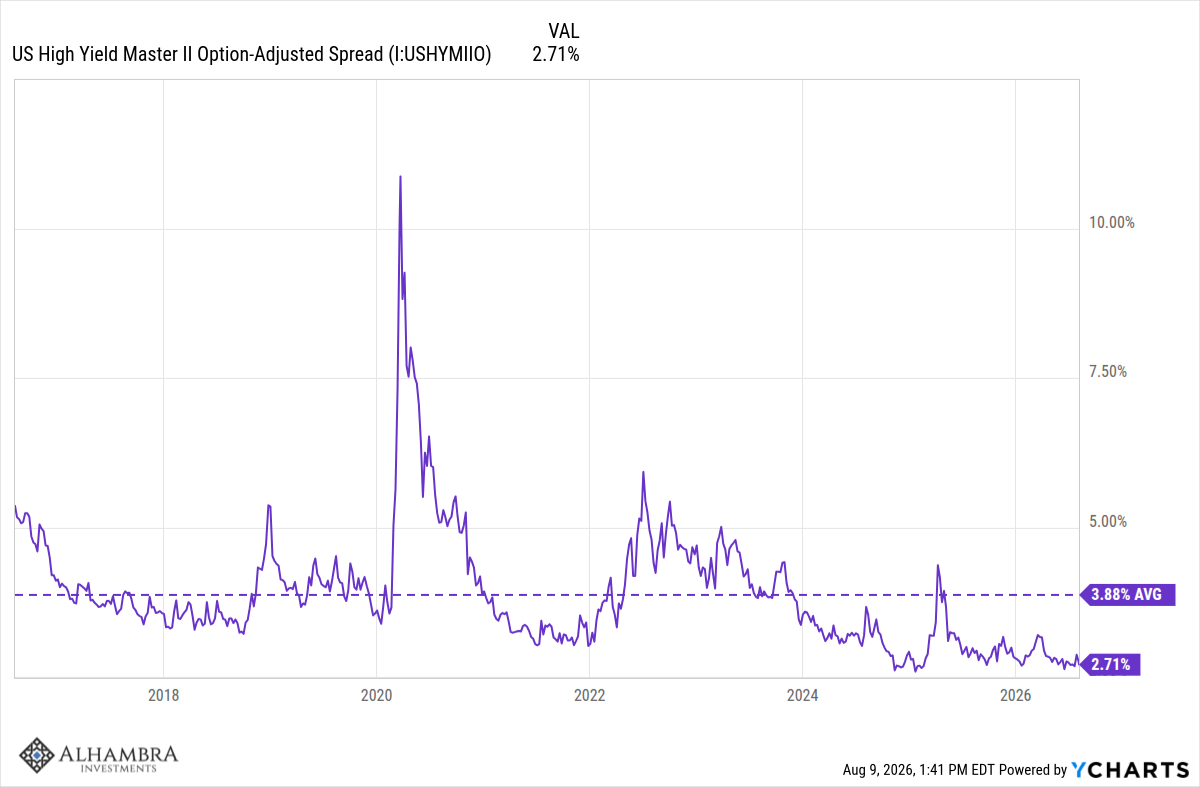
Credit spreads, the difference in yield between a risky (junk) bond and a risk-free (Treasury), are near the lows of the cycle, indicating little stress in publicly traded bonds. It also says that this is probably about as good as it gets and spreads from here are much more likely to widen than narrow further; it isn’t a great time to be buying corporate bonds. Is there stress in some of the private credit markets? Maybe, but I suspect the real risk is a few years out when we find out if AI really is all it’s cracked up to be.
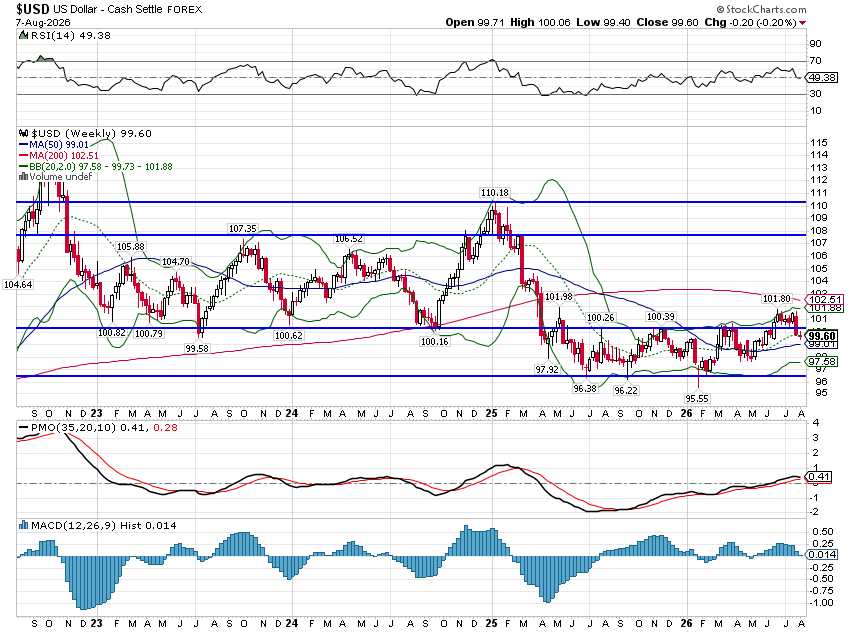
The dollar has seen a similar stability. Since the spring of 2025, the dollar index has traded in a range of about 5% around an average of about 99; we closed Friday at 99.6. I believe we will eventually break out of the bottom of this range but I don’t know that for sure so I’ll wait for it to happen – or not. We have been in a short-term uptrend since the beginning of the year but I don’t know of any conclusion one can draw from such a small move.
Our market indicators are all still in the same range they’ve occupied for years. Interest rates, nominal and real, are near the top of their ranges. Inflation expectations, somewhat surprisingly perhaps, are near the bottom of their range. What that means, is that over the last few months, real growth expectations have risen. It is tempting to say that the rise is due to expectations of increased productivity due to AI, but I’m not sure that is exactly accurate. I think it more likely reflects the view that we’re going to continue to see investments in AI capacity which, while they are going on, show up in GDP. Whether those investments pay off in higher productivity is something we don’t know yet and won’t for some time.
Economic Data Highlights
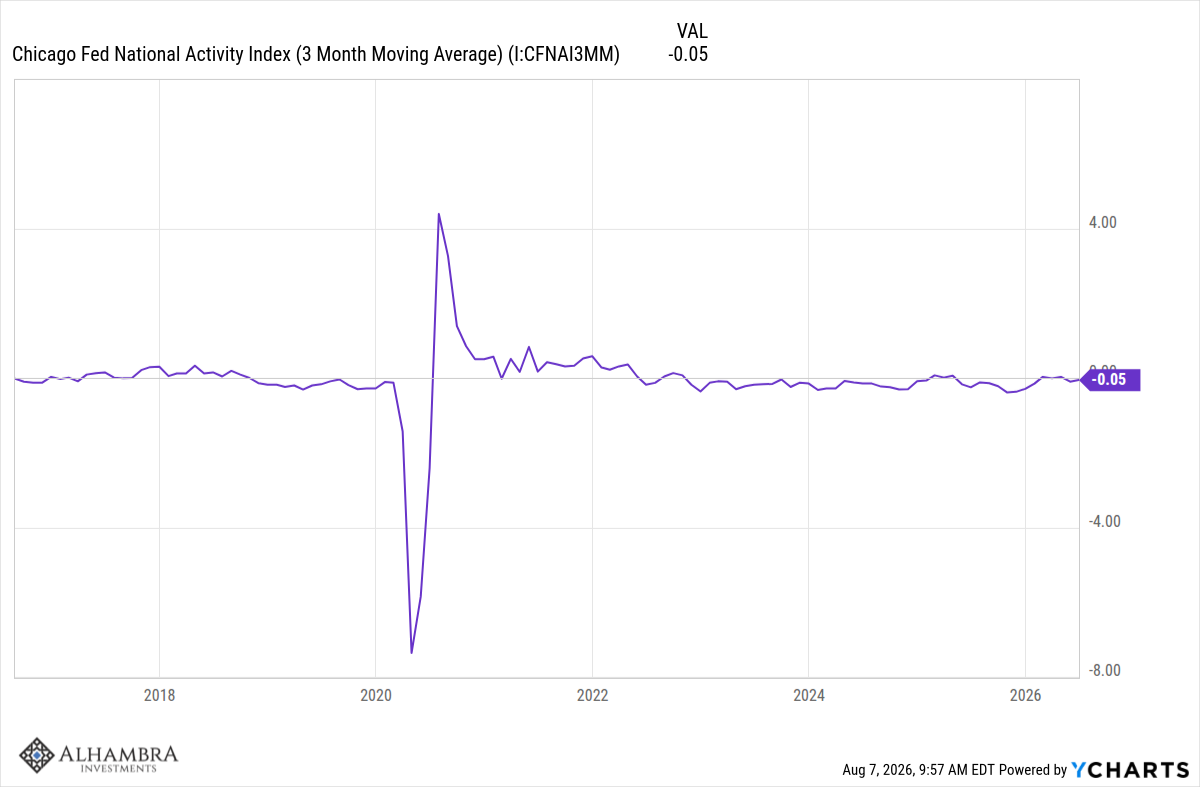
The broad-based Chicago Fed National Activity index shows exactly what you would expect given those market indicators – an economy growing at trend (CFNAI of 0 is trend; the 3-month average is currently -0.05).
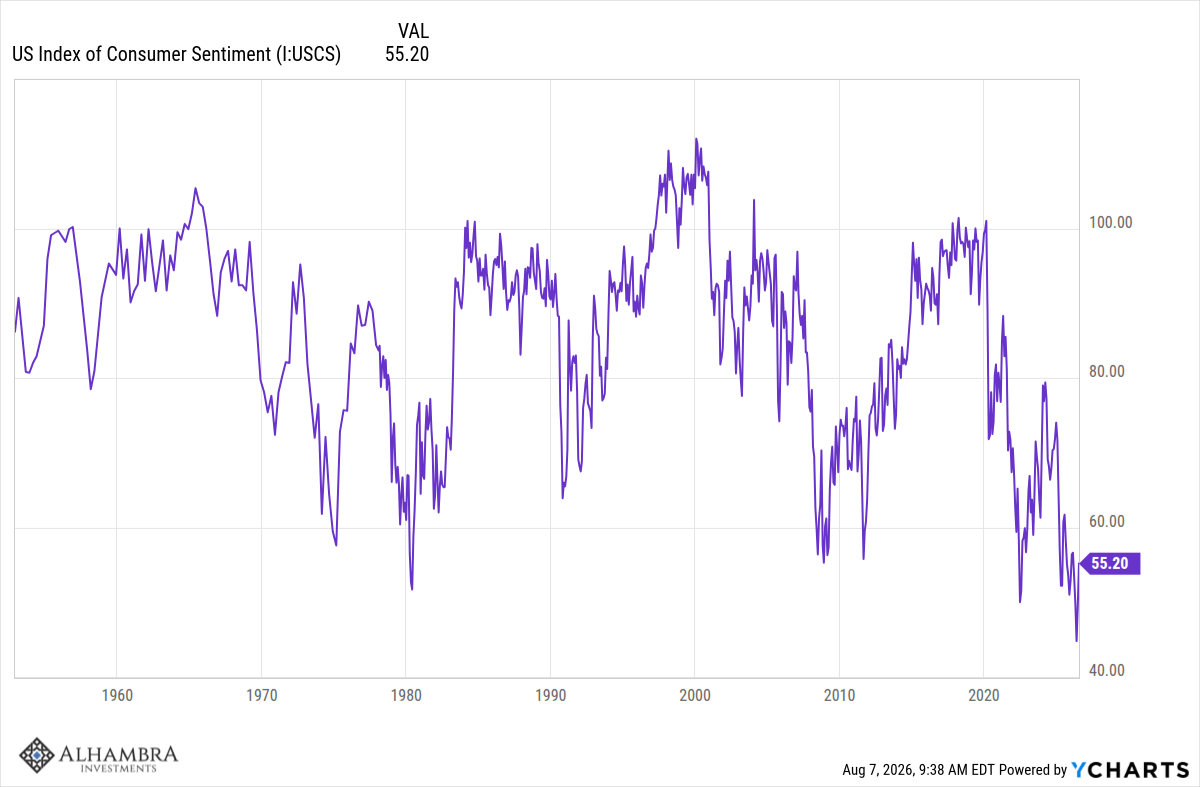
Consumer sentiment continues to be pretty awful but I would just note that for investors, this has, in the past, been a great contrarian indicator. Buying stocks when sentiment is terrible has generally been a pretty good strategy. Having said that, this survey has changed over the years so past may not be prologue. I am more interested in what people are doing than saying anyway.
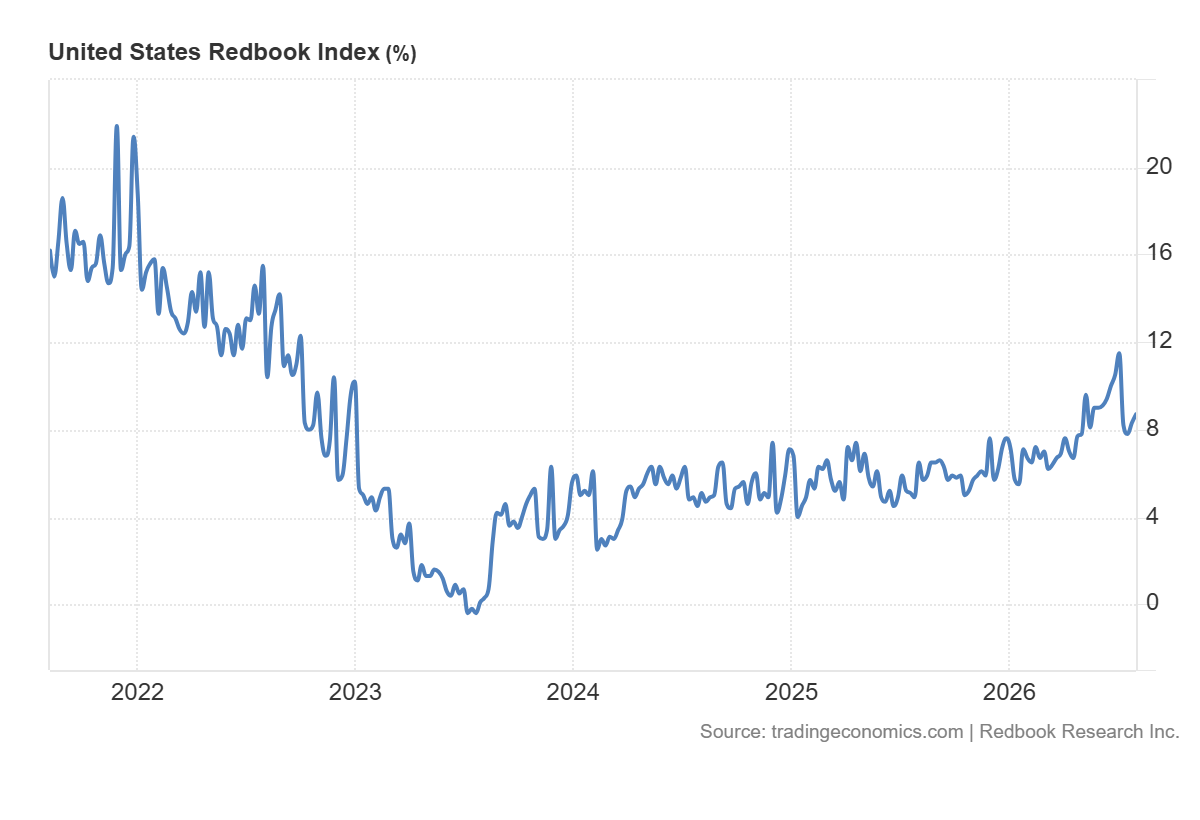
And what they’ve been doing is spending. Redbook same store sales are rising at over 8% year-over-year and even after adjusting for inflation, that is pretty damn good. People may tell pollsters the economy sucks but they sure aren’t acting like it.
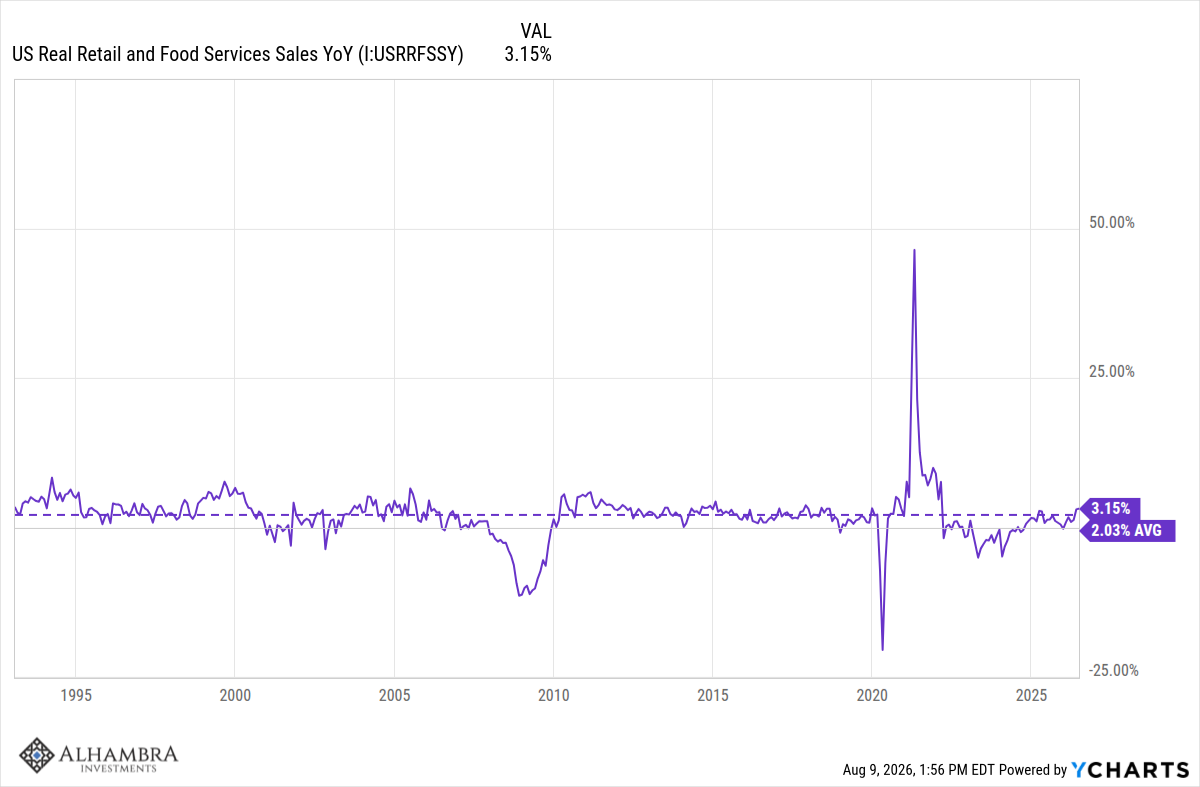
Real retail and food service sales are getting back to the trend after the COVID distortions. Right now sales growth is well above the long-term average.
Strong sales have reduced inventories relative to sales at the wholesale, manufacturer and retail level. Some portion of the inventory stress is likely due to importers trying to mitigate the cost of tariffs and maybe some have been surprised by demand but whatever the cause, restocking doesn’t look like a choice now.
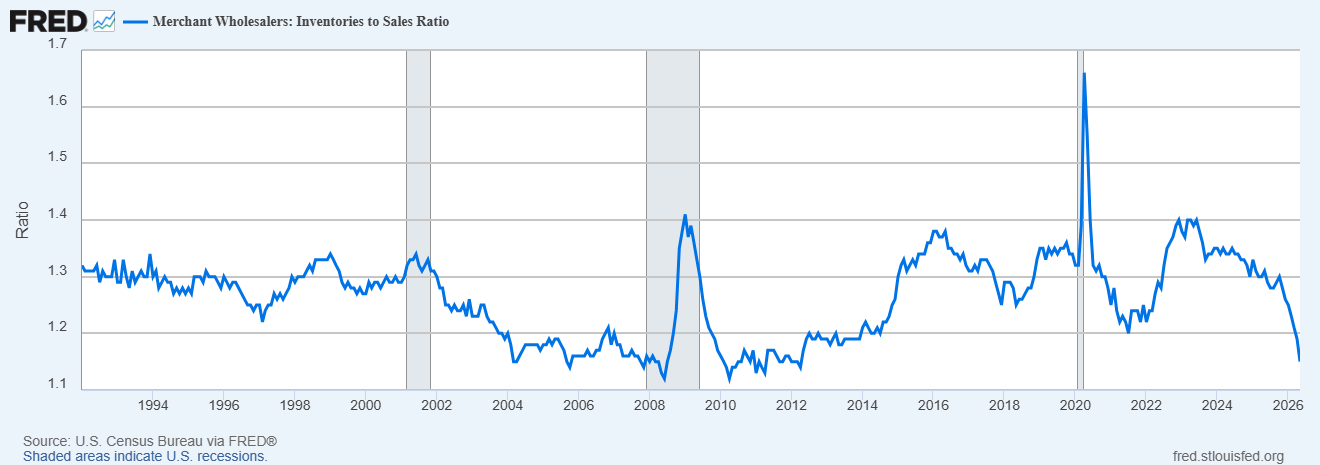
The response is a surge in durable goods orders, up 8.7% YTD versus the same time last year. The change from the same month a year ago is over 11%. It is hard to separate the AI-related orders from the rest but this isn’t all AI buildout. Computers and related products are up 20% YTD and communications equipment orders are up 33.7%; that’s obviously mostly AI. But primary metals are up 13.3% and fabricated metals are up 8.4%. Is that all AI? Probably not. Machinery is up 11.5%, motor vehicles and parts 10.4% which are also less AI related.
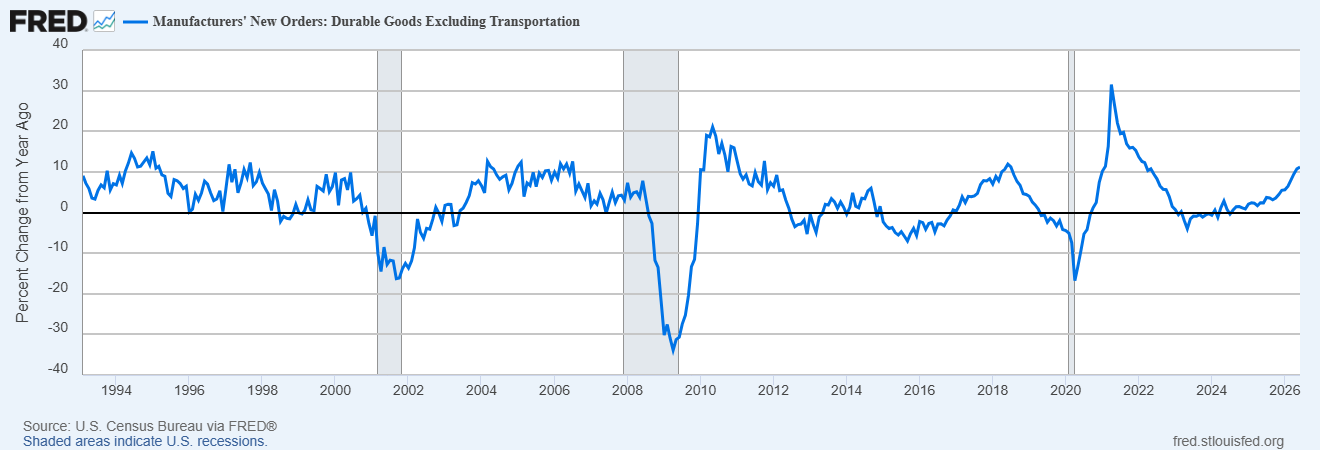
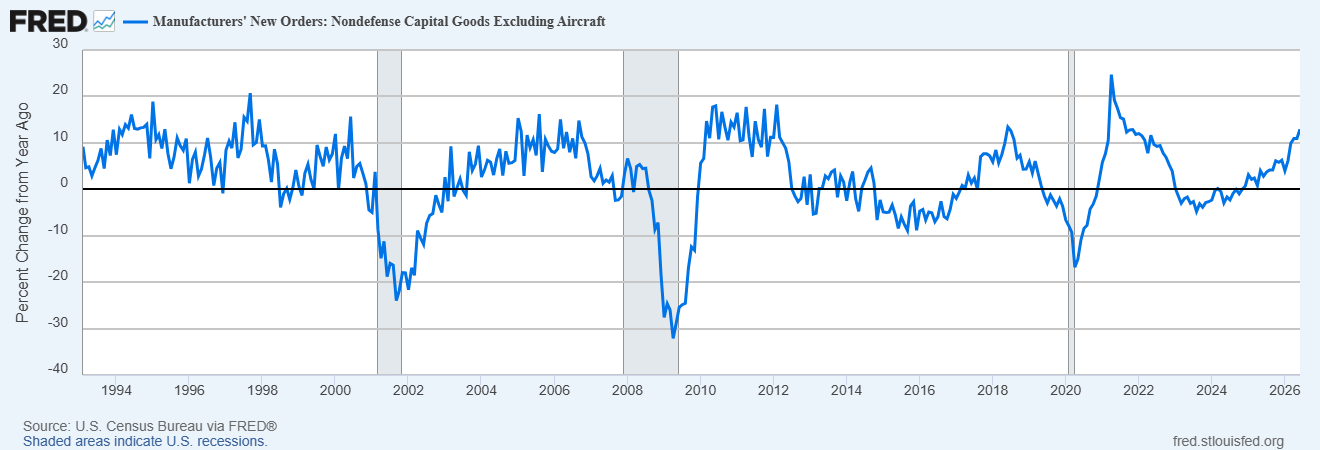
Core capital goods are also rising at a rapid rate and this is probably mostly AI but for GDP purposes now that doesn’t really matter. All investments are equal when they are made; it isn’t until later you find out if they paid off.
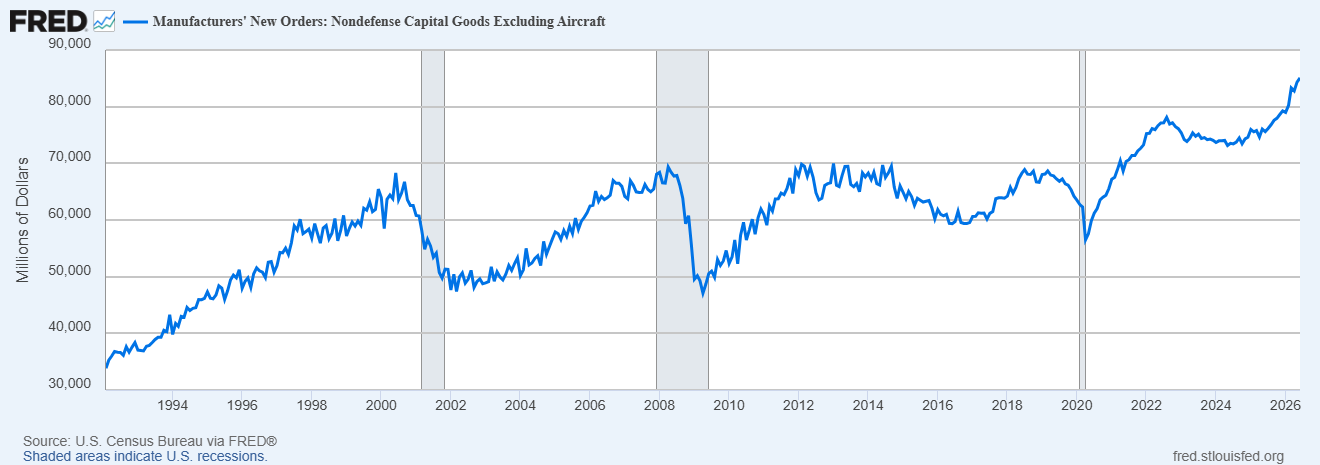
More impressive, in a way, is that break out in core capital goods orders puts them well above what had been a ceiling for 20 years. I say “in a way” because this isn’t inflation adjusted and some of this is just a rise in prices.
This surge in activity is also evident in the ISM survey. The ISM manufacturing survey has been above 50 for 7 months in a row after spending most of the time from 2022 until this year in contraction (<50).
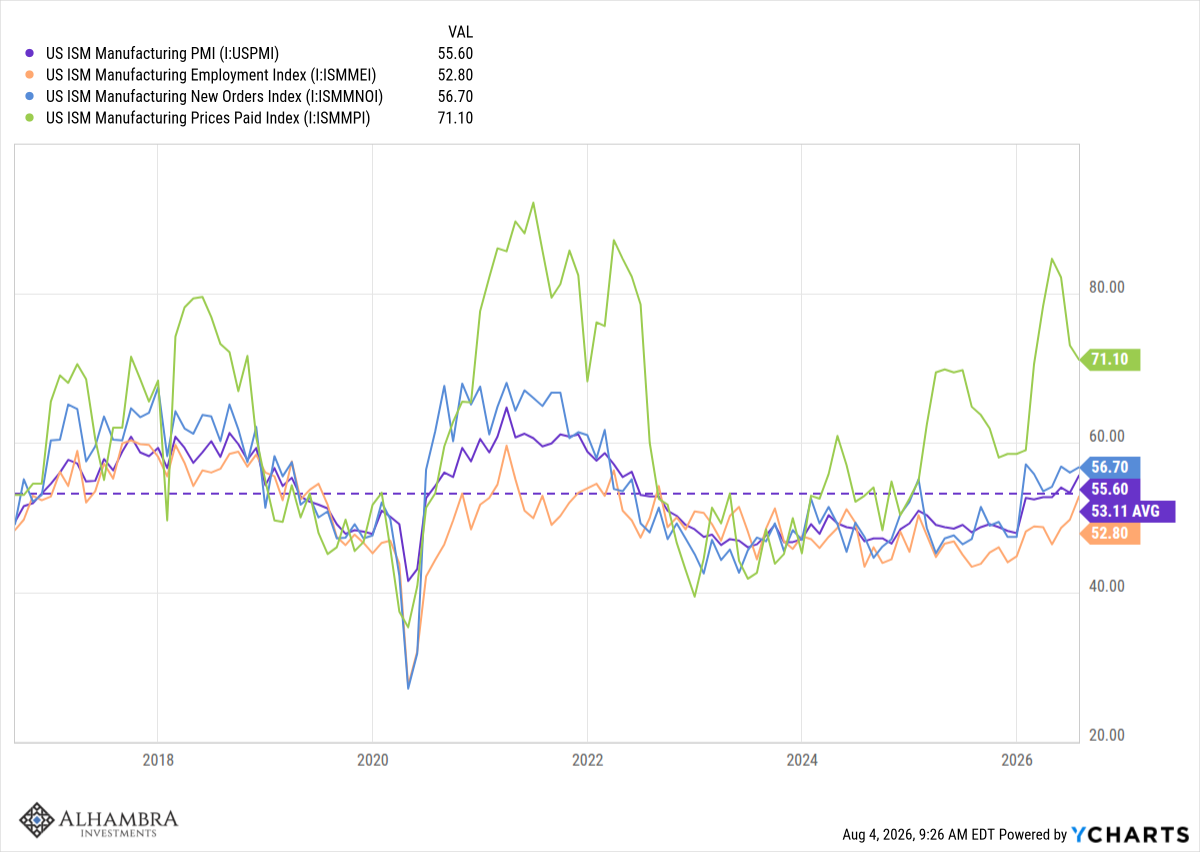
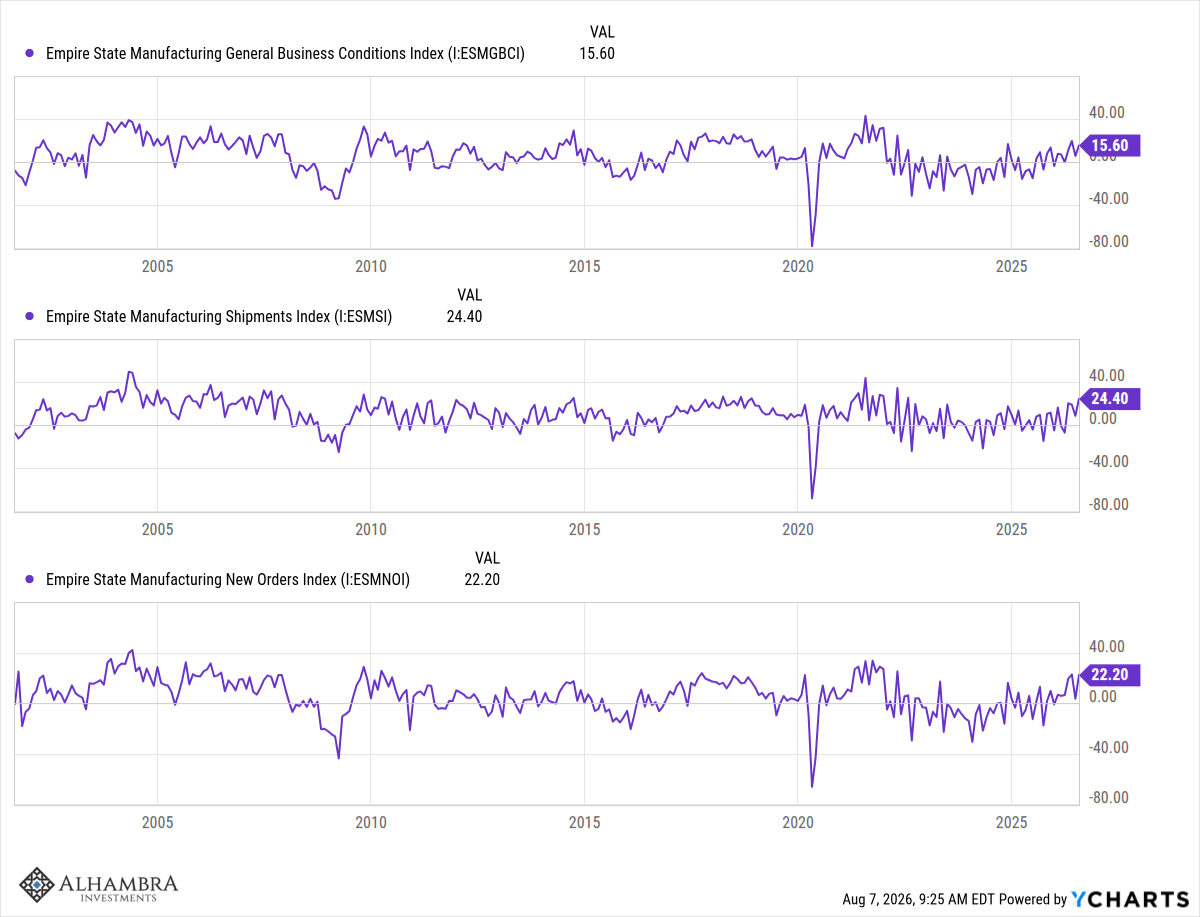
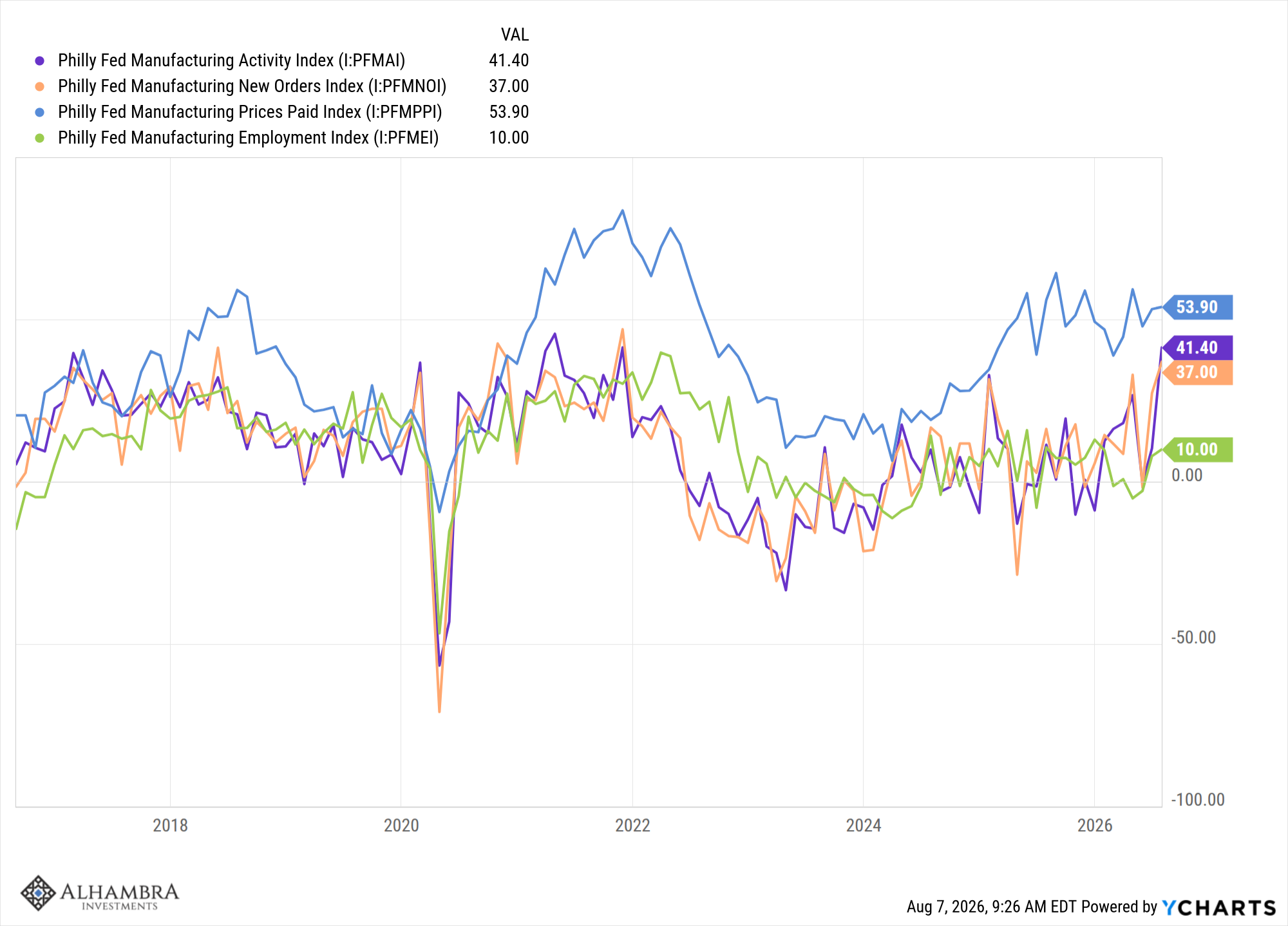
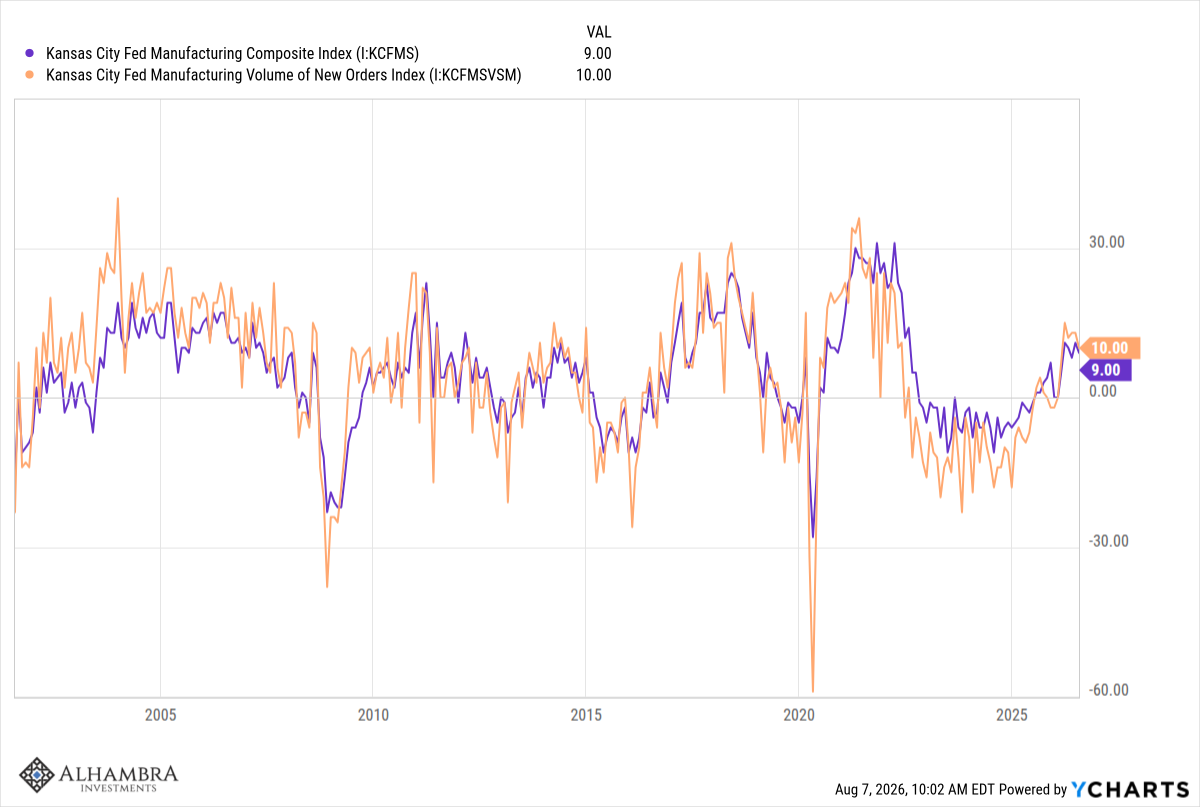
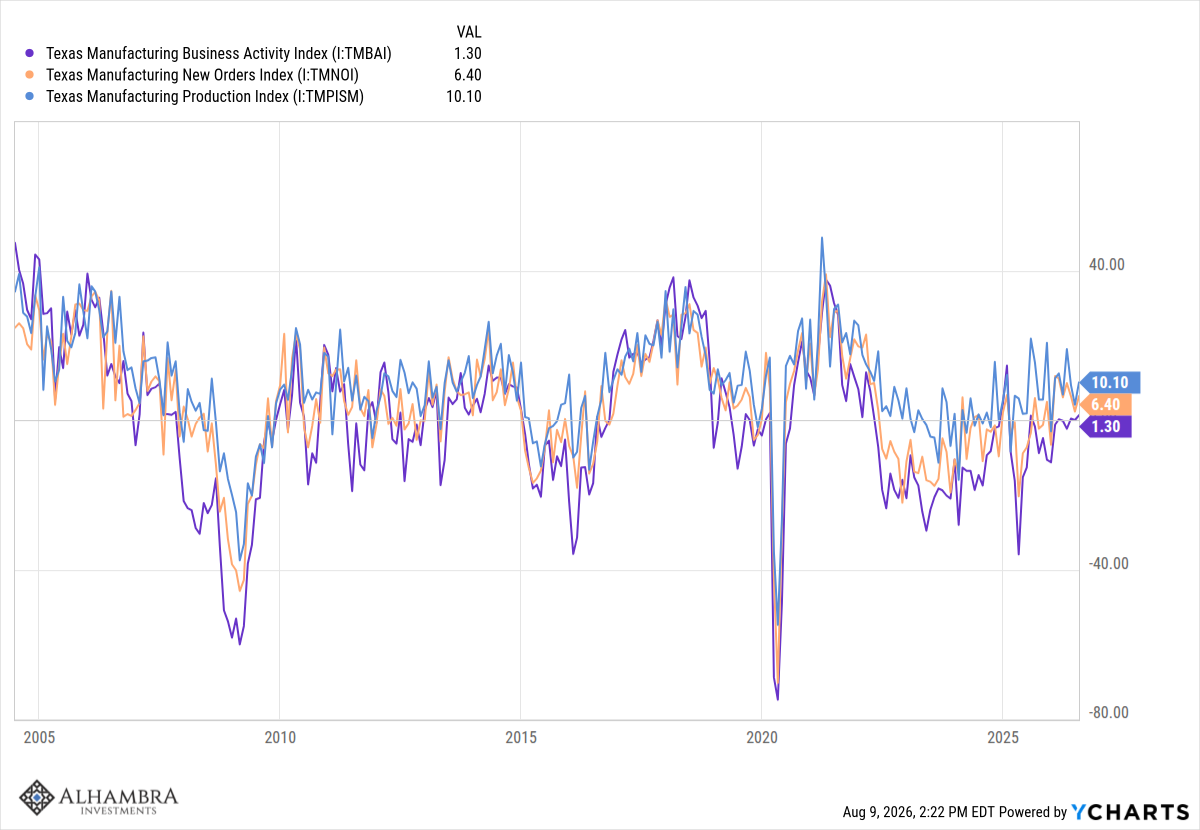
All the regional Fed manufacturing surveys are in expansion as well.
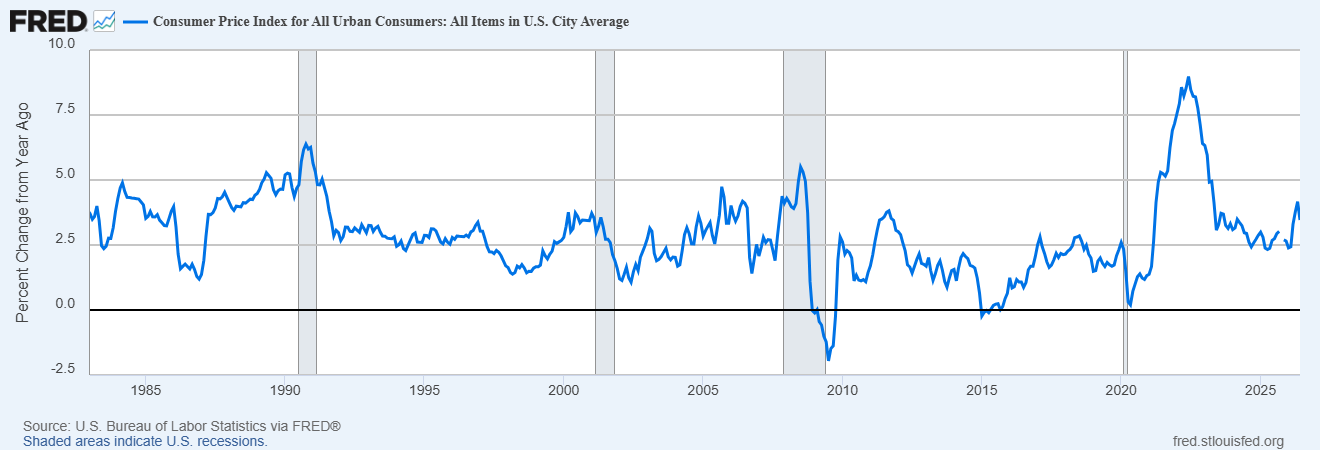
Consumer inflation remains well above the Fed’s 2% target, rising 3.5%. A lot of the recent rise is from the Iran war.
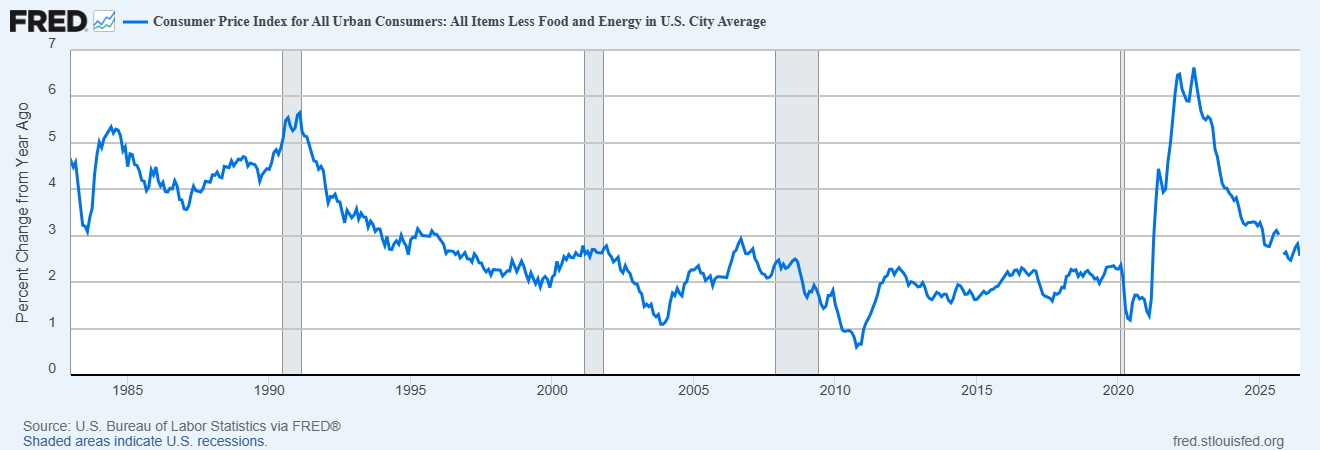
Core inflation, ex-food and energy, is still above target as well but not by much, up 2.6% year-over-year.
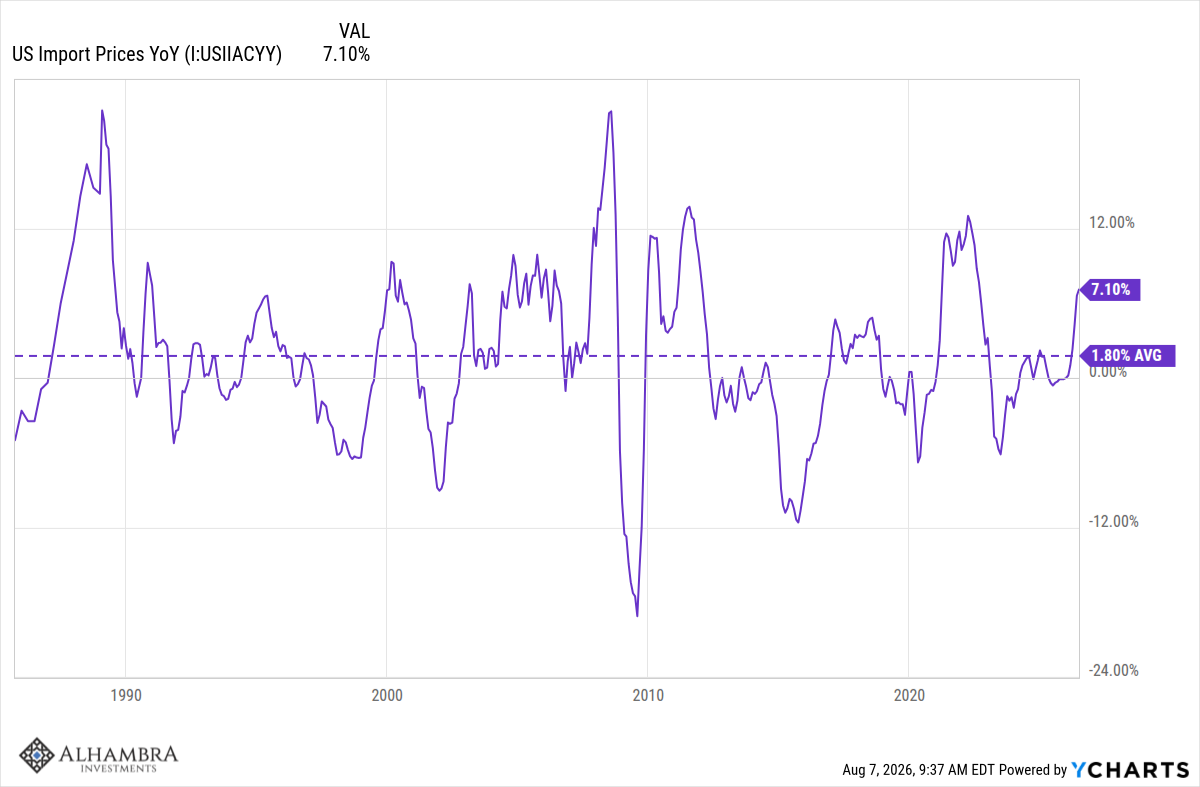
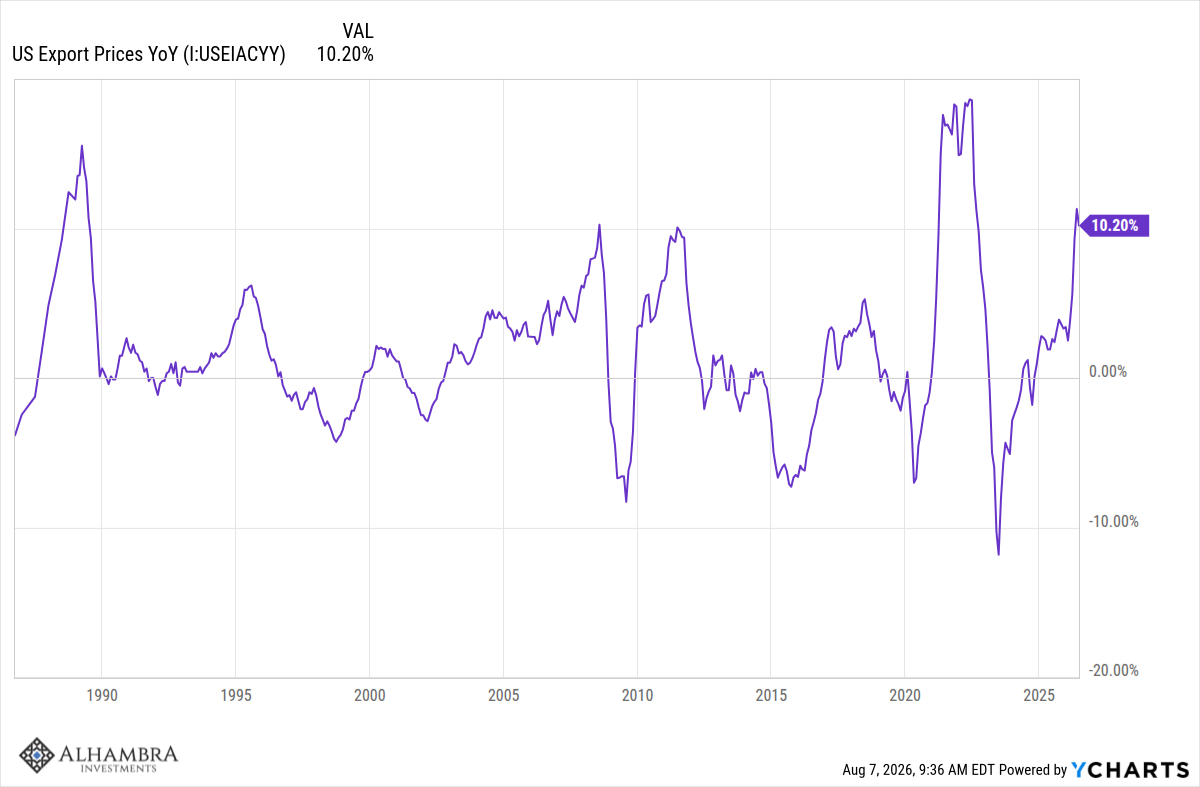
Import and export prices are rising more rapidly, as are producer prices, but that is mostly due to the prices being measured. A majority of the prices in the CPI are services, while import, export, and producer prices measure mostly goods, commodities. While commodity inflation can eventually end up in consumer prices, it isn’t a one to one relationship. Is the current trajectory worrisome? A little.
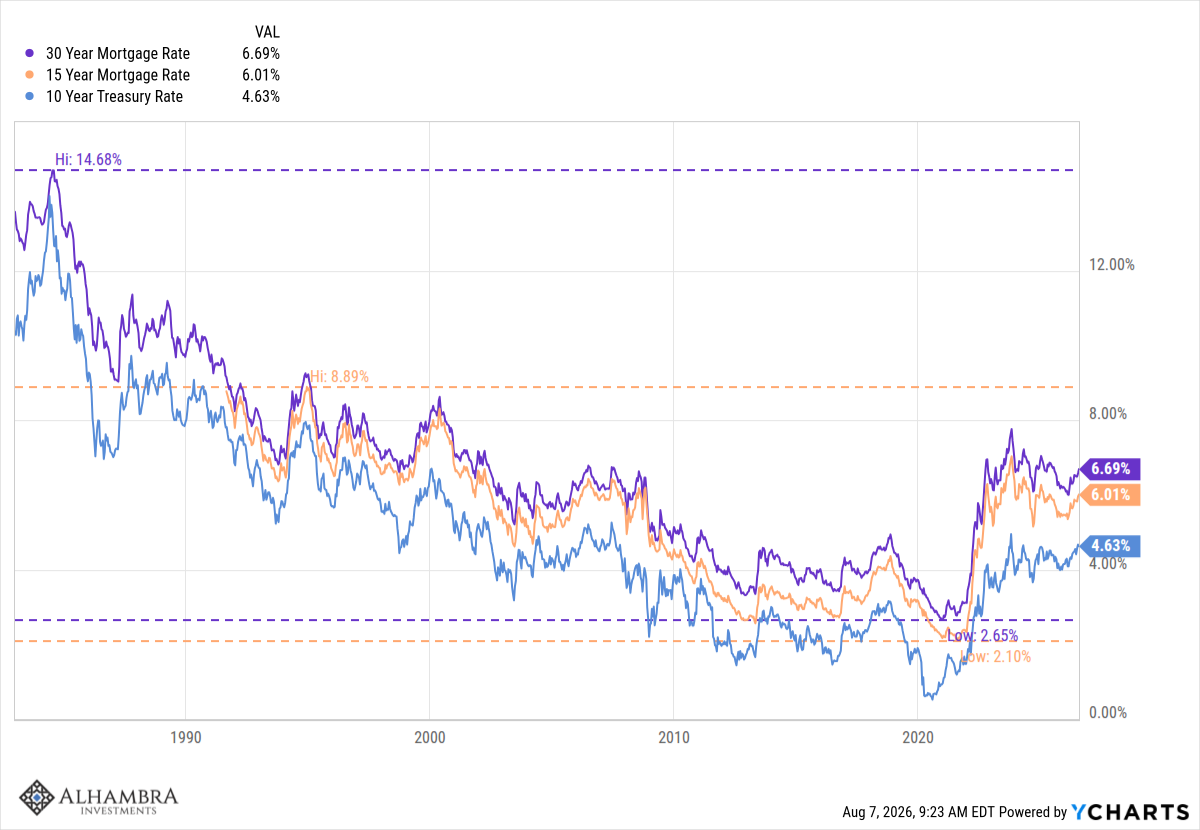
Mortgage rates have been rising lately along with Treasury rates but they are not back to their previous highs. The current rate is slightly above the average since 1990 (6.02%) but way above the average since 2010 (4.6%). That has obviously impacted mortgage applications and the housing market but looked at on a longer cycle, the composite mortgage applications index is back to where it was in the ’90s. Housing market activity since the turn of the century is the outlier; one could argue that it has taken us 20 years to finally wring out the excesses of the early ’00s housing bubble.
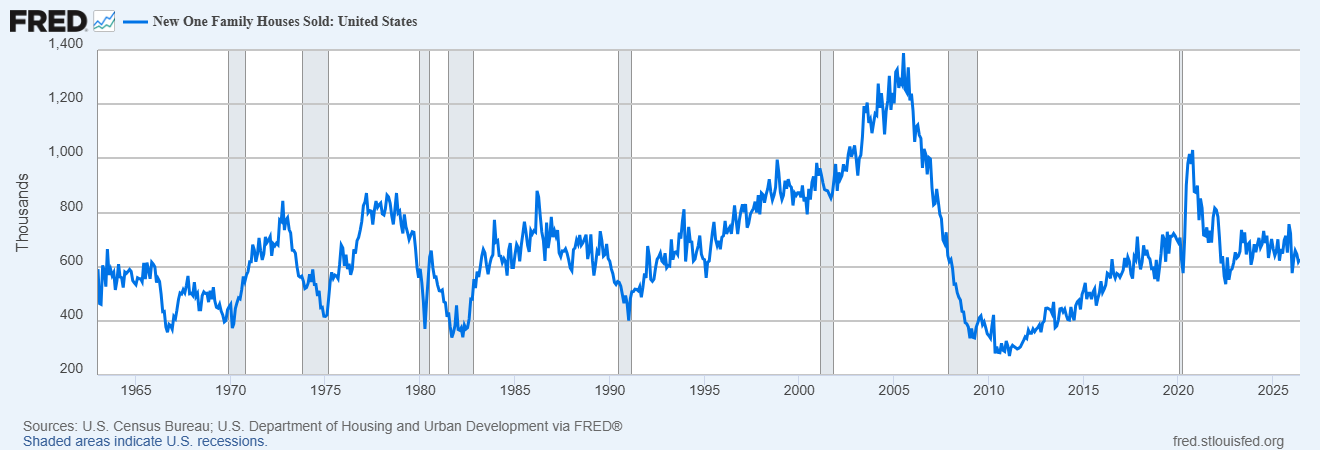
You can see what I mean with new home sales. Today’s sales level wouldn’t be worth mentioning if the huge rise in activity from 2000 to 2005 hadn’t happened.
The economy is growing at the trend of about 2% but inflation remains above long-term expectations. Core PCE, the Fed’s preferred inflation gauge, was 3.4% on an annualized basis in Q2 2026 while long-term inflation expectations are 2.28% (vs an average of 2.25%). The crowd doesn’t expect the current inflation rate to persist. That’s important to know because it is the unexpected that moves markets. What if inflation doesn’t fall back to the long-term average?
With nominal and real interest rates near the tops of their ranges, investors should be watching to see if they break out to a new higher range. That could be a signal that real growth expectations are accelerating or that long-term inflation expectations are rising, depending on what happens to real rates. For now though, nothing has changed. The economy has accelerated some recently, a combination of AI spending and restocking, but remains right around trend growth. When I look at various GDP forecasting models (using market rates), the next 4 quarters’ expected real growth rate is an average of about 1.8% to 2.0%. For most of those models you can put the +/- at about 1%, so a range of 0.8% to 3%. That’s about as accurate as you can get because current market prices can’t incorporate shocks no one expects, black swans.
Jesse Livermore once said:
It was never my thinking that made the big money for me. It always was my sitting.
It’s been almost four years of sitting and it has been profitable. And for now, we need to keep sitting and waiting because nothing, at least economically, has changed. Or at least not enough to warrant any big moves.
Joseph Calhoun

Stay In Touch